
A bedtime routine chart that ends the nightly negotiation
A bedtime routine chart does one job: it takes the sequence out of your mouth and puts it somewhere your child can point at. That is the whole trick. You stop being the person who says "teeth first" and become the person who reads the chart with them — and a rule that lives on the wall is much harder to argue with than a rule that lives in a tired parent.
Below is the chart itself — the step order that works at each age, what to leave off it, and how to tell when it has done its job and should be retired. Copy it onto a sheet of paper and stick it at your child's eye level tonight.
The chart
Four to six steps, always the same order, always ending the same way. The column on the right is the part parents forget.
| # | Step | Ages 2–3 | Ages 4–7 |
|---|---|---|---|
| 1 | Wind-down | 5 min, screens already off | 10 min, quiet play or drawing |
| 2 | Bath or wash | Same order every night | They can start it themselves |
| 3 | Pyjamas & teeth | You do it, narrate it | They do it, you check |
| 4 | Story | One short story, ~5 min | One story, they may pick it |
| 5 | Goodnights | Same words, same order | Same words, same order |
| 6 | Lights & door | Door as you left it | Door as you left it |
Step 6 is the one that gets dropped, and dropping it is what breaks the chart. If you sometimes leave the door open and sometimes closed, the last step becomes negotiable — and if the last step is negotiable, so is every step before it.
Stories to put on step four
45 sample titles from the app — short enough to sit inside a routine without stretching it.
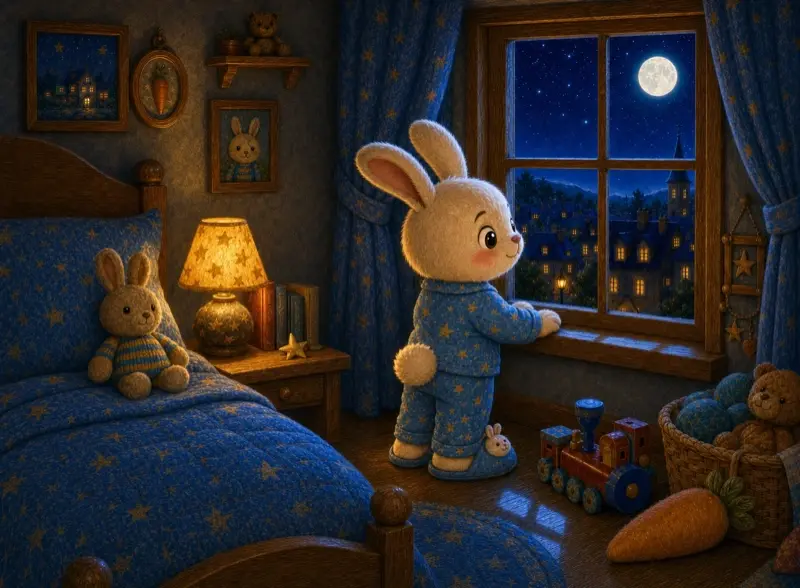
A Secret in the Night
A night too big to sleep in. One small sound in the garden. Who's out there with their light gone dim?

The Sleepy Bear
Leaves coming down swish-swish. One enormous yawn. Bramble has a whole winter to sleep through — but what has to happen first?

Counting Sheep
Moon up. Stars out. One little lamb wide, wide awake — how many sheep does it take?

Slow Down, Seal!
The fastest seal in the bay. A whole ocean going past in a blur. What is Sully swimming straight past at top speed?
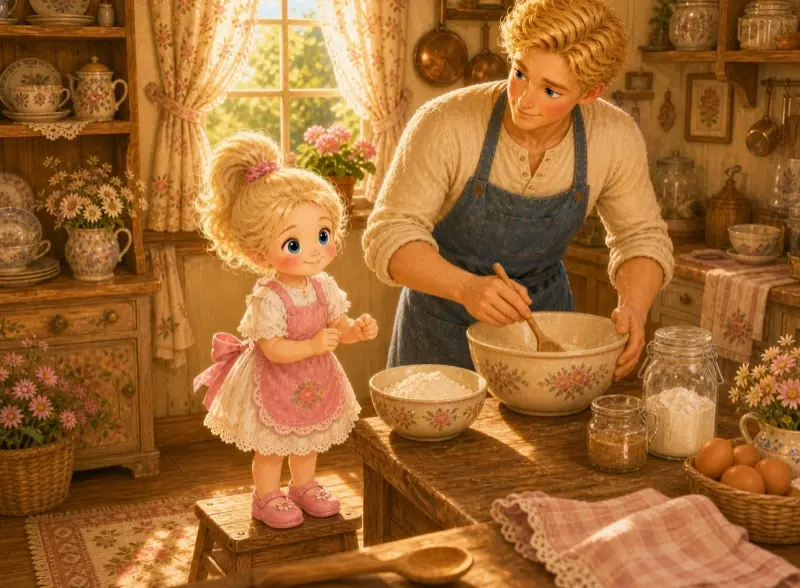
Maya Waits for the Cake
Batter in the pan. Timer set. Mama's birthday cake is in the oven — so how do you survive the waiting?
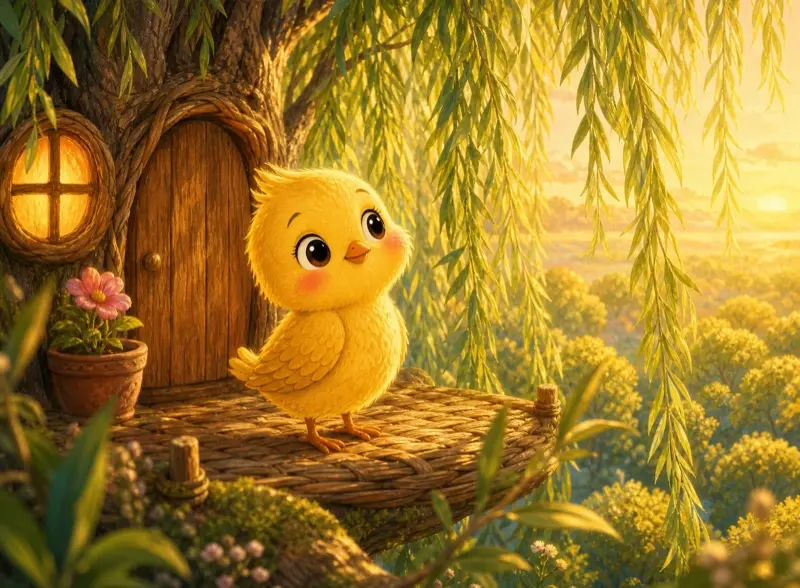
The Beautiful Nest
One grass stem. One rose petal. One curl of silver vine. Everyone says the nest will take forever — so is it worth the wait?

The Big Wide World
The slowest mover at the pond, and hills he's stared at every single evening. What does a turtle see if he stops rushing and starts looking?
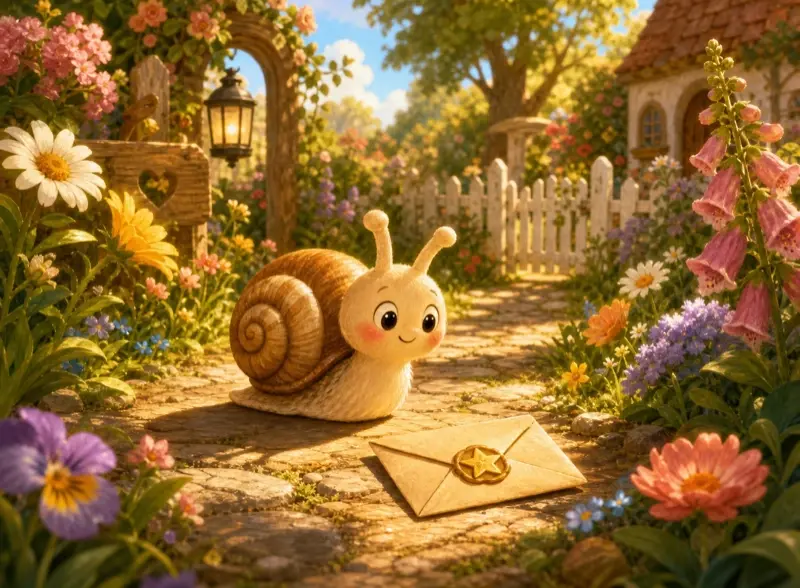
Late to the Party
Gold-star invitation. One very slow snail. The sun is already going down — will anyone still be waiting?

Leo's Museum Day
Rain all morning. A dinosaur taller than the room. A hundred questions that won't wait — which one does Leo ask first?
Making the chart actually work
- Write the chart from tonight's real routine, not an ideal one. If bath happens three nights a week, bath is not step two. A chart that describes a routine you don't have fails on the first night and never recovers.
- Put it where the routine happens, not on the fridge. Eye level in the bedroom beats the kitchen door — the chart has to be in the room where the sequence is being run.
- Let your child move the marker. Ticking the step is the part they own. Doing it themselves is what converts the chart from a rule into something they run.
- Keep the reward small or absent. The chart is the reward — it removes the arguing. Bolting a sticker on top is what turns it into a negotiation about stickers. When charts and rewards stop working is worth reading before you add anything.
- Retire it when it stops being read. Once your child runs the sequence without looking, the chart has succeeded. Leaving it on the wall past that point invites them to start testing it again.
Related hubs & guides
Bedtime routine chart FAQ
What should go on a bedtime routine chart?+
Four to six steps, in the exact order you actually do them: bath, pyjamas, teeth, story, lights, door. Nothing aspirational. A chart that lists steps you skip half the time stops being a chart and becomes a nightly argument.
How many steps is too many?+
More than six. Under three years old, four is the ceiling — a two-year-old can hold a short sequence in mind but not a long one, and a chart they can't remember can't be followed.
Should the chart use pictures or words?+
Pictures below four, words above five. The point of the chart is that your child can run it themselves, so it has to be readable at their level — a sticker or a drawing they recognise beats a sentence they can't.
The chart worked for a month and now it doesn't. Why?+
This is the normal life cycle, not a failure. A chart works while it is novel and while it is doing the remembering for you; once the sequence is habit, the chart is just decoration. When it stops helping, drop it rather than adding stickers — see the guide on bedtime charts and rewards for why adding more reward usually makes it worse.
Step four, sorted every night
Download is free and some stories are free to read now. Premium unlocks the full library — so the story step never runs out of something new.